Blog


Feb 6, 2026
Shopping without a list — when the store shapes the decision, Tesco Media study
Brands often plan their strategies on the assumption that shoppers arrive with a list and simply tick items off one by one. In reality, shopping rarely works that way
According to Tesco Media research, 76% of purchases new, lapsed, or occasional! Shoppers enter the store without a fixed brand or product in mind, and the decision is made on the spot. Truly habitual purchases account for just 24%.
These findings come from Tesco — the UK’s largest grocery retailer, with around 30% market share. The research focuses on in-store digital communications — screens and other touchpoints that sit directly at the moment of choice, where most sales are actually made.
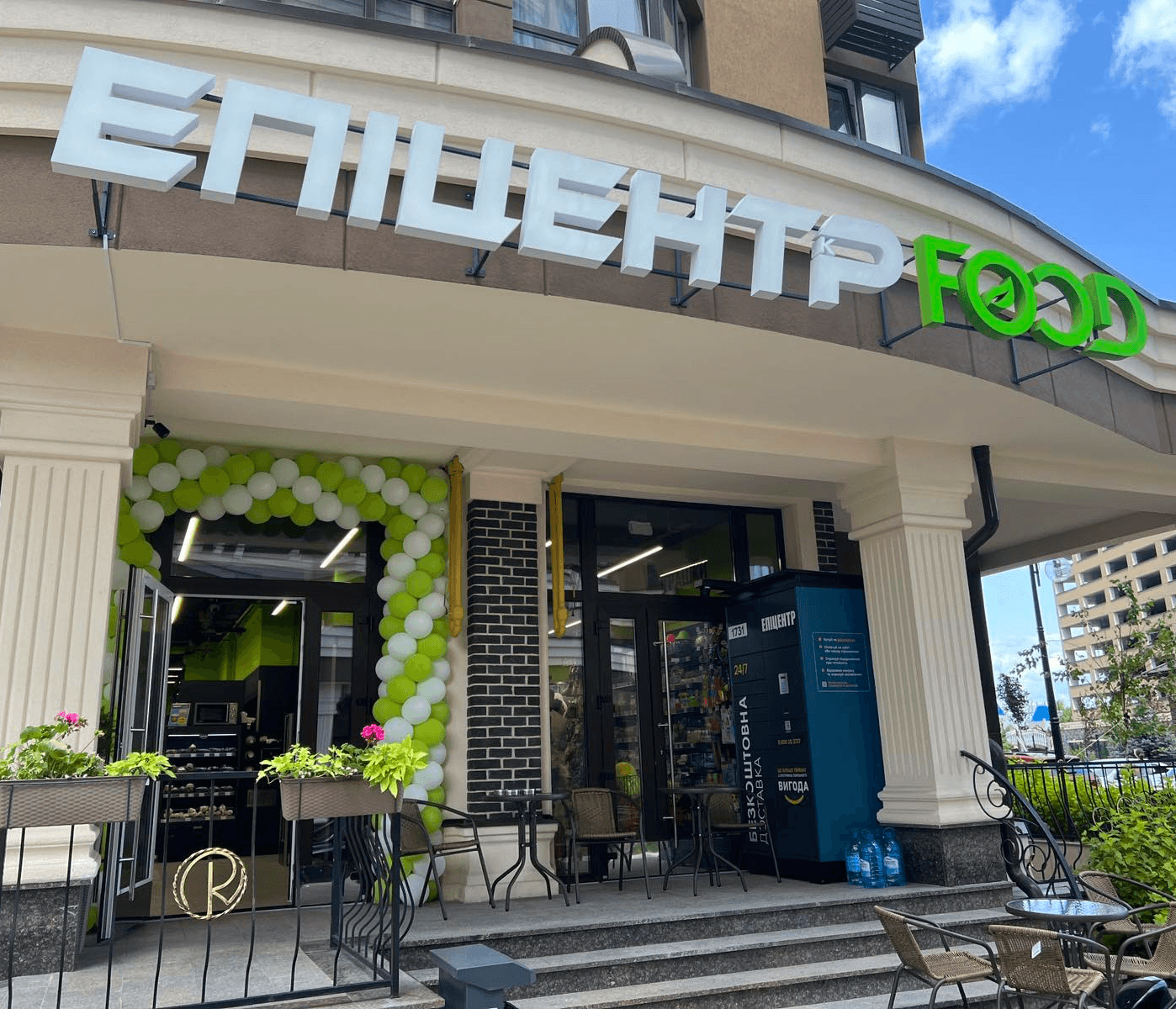
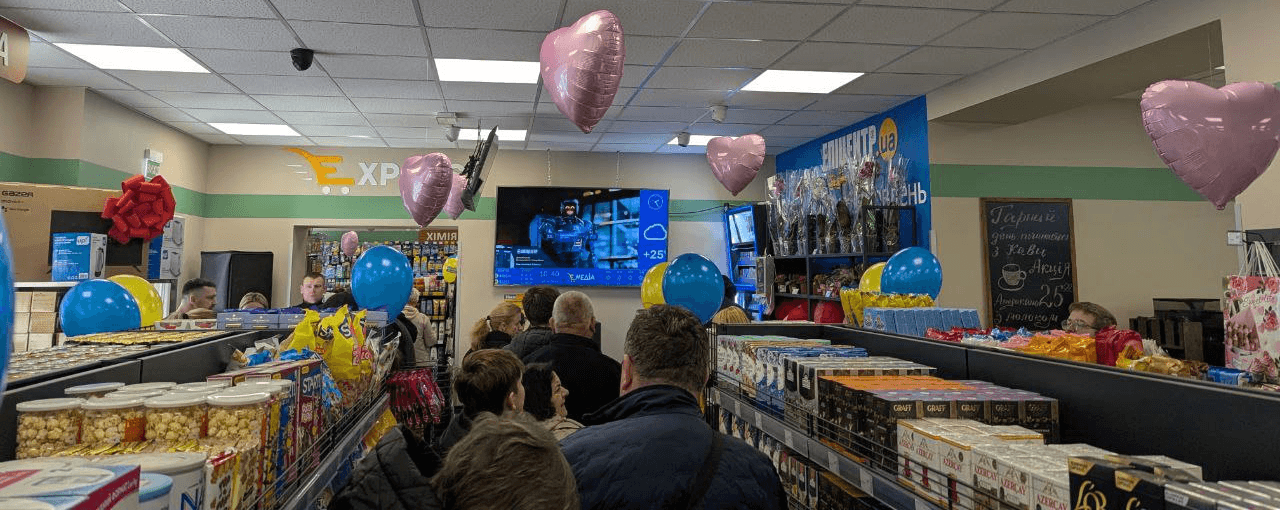
By its format, this model aligns closely with Ukrainian neighbourhood convenience stores — Epicentr EXPRESS/ FOOD/HOME, offering an everyday product range. It is not about planned, large-scale shopping, but rather short, frequent visits built naturally into daily routines: on the way home, during a walk, or between everyday errands.
Despite their type, these stores do not limit choice. With floor space of 300–500 square metres, they offer breadth across categories. Even when shoppers know what they need, the final brand decision is often made in-store.
Tesco Media’s Moving Mindsets study, based on more than 7,000 respondents, positions the store not just as a point of sale, but as a place where decisions are actively formed.
What the data shows
Seven in ten shoppers (71%) make their final decision while shopping. Choice is shaped in the moment, within the retail environment itself. This is why in-store media is not background noise — it plays a direct role in decision-making, particularly for shoppers without strong brand loyalty.
Mindset also shifts during the visit. Shoppers typically start in a functional mode — focused on speed and necessity. As they move through the store, attention often becomes more emotional, influenced by brands, design and ideas. The research shows that 78% of shoppers change mindset at least once during a visit, with over half (51%) making that shift halfway through their shop.
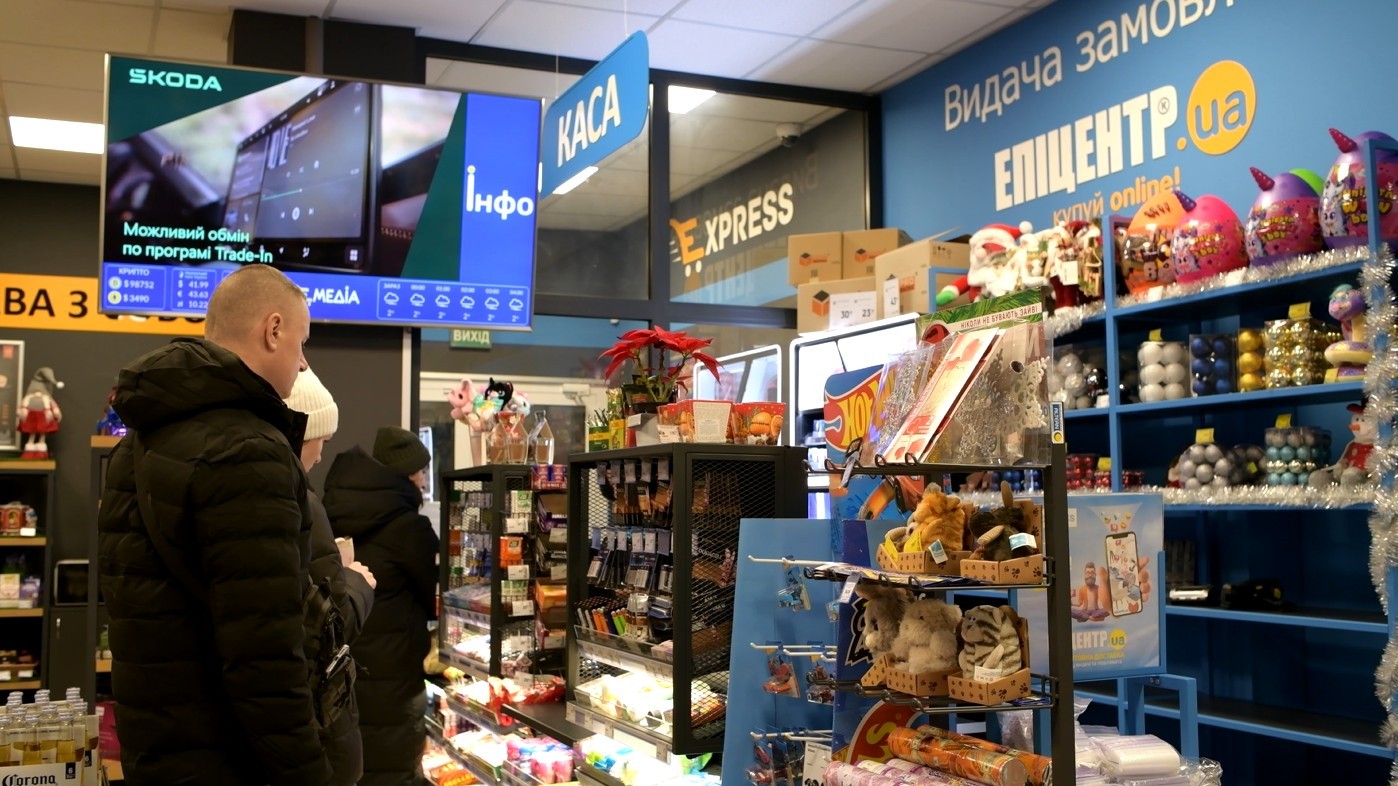
That is why it matters for a brand to be present at multiple points within the store. In the Epicentr EXPRESS/ FOOD/ HOME format, this is delivered through digital screens encountered along the shopper’s route, supported by audio communication across the entire space. As a result, the brand is not seen just once on the shelf among competitors, but remains present throughout the whole visit.
Moreover, the influence extends beyond in-store products. The research also shows that 78% of shoppers are open to advertising from brands not sold in the store at all. This positions the store as a genuine media environment, not just for FMCG, but for categories such as financial services, travel, entertainment and health.
In a broader sense, this format creates the conditions in which brands can genuinely drive growth. Sales and shopper behaviour research — including work by the Ehrenberg-Bass Institute — points to a simple insight: long-term growth does not come from loyal buyers. They already purchase the brand frequently, and it is difficult to significantly increase either frequency or volume.
Instead, the main source of growth comes from people who do not currently buy the brand, or who purchase it only occasionally. Reaching these buyers, at the moment when decisions are still open, is what allows brands to expand their customer base and grow sustainably.
This is exactly the audience that dominates this format. As mentioned earlier, in 76% of cases purchases are not habitual — choices are made in the moment. This means that most decisions remain open, and neighbourhood convenience stores give brands a real opportunity to engage shoppers who have the greatest impact on long-term growth.
That is why Tesco, together with its partner agency Dunnhumby, encourage brands to rethink the role of media in retail. Not as a tool for short-term sales alone, but as a media channel that influences decision-making — one that works with the shopper’s mindset before and during the purchase, encouraging brand discovery and choice switching.
In this approach, retail media is not just about performance. It is a strategic growth tool that can also build brands. Use it!

According to Tesco Media research, 76% of purchases new, lapsed, or occasional! Shoppers enter the store without a fixed brand or product in mind, and the decision is made on the spot. Truly habitual purchases account for just 24%.
These findings come from Tesco — the UK’s largest grocery retailer, with around 30% market share. The research focuses on in-store digital communications — screens and other touchpoints that sit directly at the moment of choice, where most sales are actually made.

By its format, this model aligns closely with Ukrainian neighbourhood convenience stores — Epicentr EXPRESS/ FOOD/HOME, offering an everyday product range. It is not about planned, large-scale shopping, but rather short, frequent visits built naturally into daily routines: on the way home, during a walk, or between everyday errands.
Despite their type, these stores do not limit choice. With floor space of 300–500 square metres, they offer breadth across categories. Even when shoppers know what they need, the final brand decision is often made in-store.
Tesco Media’s Moving Mindsets study, based on more than 7,000 respondents, positions the store not just as a point of sale, but as a place where decisions are actively formed.
What the data shows
Seven in ten shoppers (71%) make their final decision while shopping. Choice is shaped in the moment, within the retail environment itself. This is why in-store media is not background noise — it plays a direct role in decision-making, particularly for shoppers without strong brand loyalty.
Mindset also shifts during the visit. Shoppers typically start in a functional mode — focused on speed and necessity. As they move through the store, attention often becomes more emotional, influenced by brands, design and ideas. The research shows that 78% of shoppers change mindset at least once during a visit, with over half (51%) making that shift halfway through their shop.

That is why it matters for a brand to be present at multiple points within the store. In the Epicentr EXPRESS/ FOOD/ HOME format, this is delivered through digital screens encountered along the shopper’s route, supported by audio communication across the entire space. As a result, the brand is not seen just once on the shelf among competitors, but remains present throughout the whole visit.
Moreover, the influence extends beyond in-store products. The research also shows that 78% of shoppers are open to advertising from brands not sold in the store at all. This positions the store as a genuine media environment, not just for FMCG, but for categories such as financial services, travel, entertainment and health.
In a broader sense, this format creates the conditions in which brands can genuinely drive growth. Sales and shopper behaviour research — including work by the Ehrenberg-Bass Institute — points to a simple insight: long-term growth does not come from loyal buyers. They already purchase the brand frequently, and it is difficult to significantly increase either frequency or volume.
Instead, the main source of growth comes from people who do not currently buy the brand, or who purchase it only occasionally. Reaching these buyers, at the moment when decisions are still open, is what allows brands to expand their customer base and grow sustainably.
This is exactly the audience that dominates this format. As mentioned earlier, in 76% of cases purchases are not habitual — choices are made in the moment. This means that most decisions remain open, and neighbourhood convenience stores give brands a real opportunity to engage shoppers who have the greatest impact on long-term growth.
That is why Tesco, together with its partner agency Dunnhumby, encourage brands to rethink the role of media in retail. Not as a tool for short-term sales alone, but as a media channel that influences decision-making — one that works with the shopper’s mindset before and during the purchase, encouraging brand discovery and choice switching.
In this approach, retail media is not just about performance. It is a strategic growth tool that can also build brands. Use it!


